|
|
|
|
Home > The Evaluation of Forensic DNA Evidence
|
|
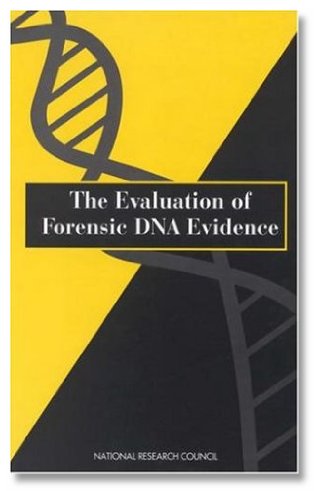
The Evaluation of Forensic DNA Evidence
|
 (2 Reviews) (2 Reviews)
|
|
|
Availability:
|
|
|
Published:
|
December 12, 1996 |
|
Binding:
|
Hardcover
|

|
|
|
| |
Most Helpful Customer Reviews:
Add Your Own Review |
 A Must Have For Litigators, April 02, 2011 A Must Have For Litigators, April 02, 2011
By California Bill
|
|
If you are an attorney and you attempt to wade into forensic DNA work in court, particularly population genetics - this is the seminal treatise by the National Research Council. You simply must own a copy of this book. The NRC hasn't published anything since 1996 which addresses forensic DNA work in more detail. The 2009 NRC report essentially calls DNA the gold standard of the forensic sciences and issues a call to action for the improvement of other forensic disciplines.
What this book is: A foundational treatise that experts rely on.
What this book is not: An easy "how to" guide to DNA for litigators and others looking to learn about forensic DNA work.
Was this review helpful to you?
|
|
|
|
 Not for the average reader, January 06, 2008 Not for the average reader, January 06, 2008
By G. Herzberg (Los Angeles, CA USA)
|
|
I was surprised to find this book in my recommendation list; I purchased Butler's excellent Forensic DNA typing text in the past which is why I'm guessing it was recommended -- I see it also comes up on searches for "forensic DNA."
This is a warning to people who might be interested in the field of forensic DNA but possibly not work in it. If you do work in the field, it's likely that your lab already owns of a copy of this seminal text as well as its predecessor, NRC1 (1992).
For the rest of you, this book is most likely not appropriate for what you are looking to learn. This text was published when the use of DNA for forensic applications was still new and untested; it set recommendations on how labs should interpret DNA evidence results, on the methods that should be used and the considerations that should be taken when coming to conclusions based on DNA evidence. Why? Because no one knew. 12 years after this text was published, many of the methods described within have been made obsolete, only employed by developing countries whose police forces may not have the funding to employ modern methods. Furthermore, several of the sticky issues from the past are no longer relevant as new typing systems are much more precise and have much less ambiguity in interpretation.
While the concepts within are in practice in some form in all forensic DNA labs in the US, it is unlikely that the average armchair criminalist will find much use with this text -- maybe if you're setting up your own forensic DNA lab from scratch, or if you are really hardcore into the history of forensic DNA, but most of us have no need of this text.
If you're interested in forensic DNA as someone who just wants to learn more or are interested in getting a position in the field, I recommend Butler's text over this one.
One more thing: because this is a work created by the US Govt, it is not subject to copyright. There is a free copy of this in electronic form from the National Academies Press website, which is even searchable for when you really want to find that part that gets rid of the ceiling principle.
3 of 3 people found the above review helpful.
Was this review helpful to you?
|
|
|
|
|
|
|