|
|
|
|
Home > Evidence-Based Dentistry: An Introduction
|
| Product Description: |
|
| |
|
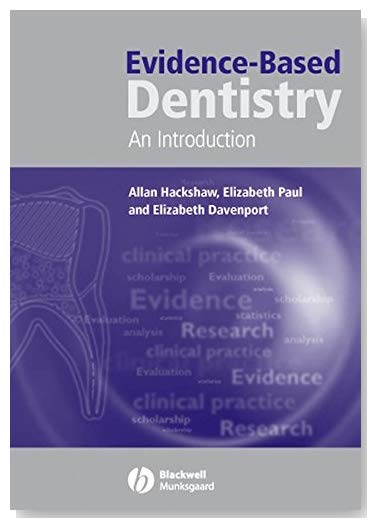
This introduction to Evidence-Based Dentistry provides a much-needed orientation in the subject for students and professionals alike. It is a ground-level book for those seeking to understand evidence-based dentistry and its significance for clinical practice. The book is anchored in the dental literature: the majority of the chapters offer guidance on interpreting a full published paper; where both the subject of the paper and the study design is of relevance to the field of dentistry. Each chapter is organised in a similar way, providing a structured approach to reading and understanding research articles or commercial product information. In this respect, Evidence-Based Dentistry is designed as an introduction to understanding published research and its implications for the dental surgery; rather than as a guide on undertaking research. - Incorporates topical published papers in order to rpovide worked examples
- Explains the most common forms of research used in dentistry
- Unlocks basic statistical and epidemiological concepts, along with key terms
- Enables the reader to identify the research question, assess aspects of study design, evaluate the strengths and weaknesses of papers and understand their clinical relevance
- Tables, boxes and figures are used extensively to present core information. Useful templates are also provided, which readers may use/adapt for analysis, including study clubs.
Author Information Allan Hackshaw established and led the course on evidence-based dentistry at Barts & the London School of Dentistry and is now deputy-director of the cancer trials centre at University College London. Elizabeth Paul is a Lecturer at the UCL cancer trials centre. Elizabeth Davenport is Professor of Dental Education, Barts & the London School of Dentistry. Table of Contents - Foreword
- Preface
- Acknowledgement
- Evidence-based Dentistry: What it is and how to Practice It
- Counting People: Understanding Percentages and Proportions
- Taking Measurements on People
- Comparing Groups and Examining Associations/
- Assessing the Effectiveness of Treatments
- Determining Risk Factors for and Causes of Disease
- Detecting Disease
- Comparison of Different Research Studies
- Reviewing all the Evidence
- Summary of Statistical Concepts
- Suggested Answers
- Further Reading
- Index
|
|
|
| |
Most Helpful Customer Reviews:
Add Your Own Review |
 Exactly what I Wanted, March 11, 2012 Exactly what I Wanted, March 11, 2012
By Stardust
|
|
The product was exactly what I was looking for and came just as described. It arrived in a timely manner. I am very pleased with the purchase.
Was this review helpful to you?
|
|
|
|
|
|
|