|
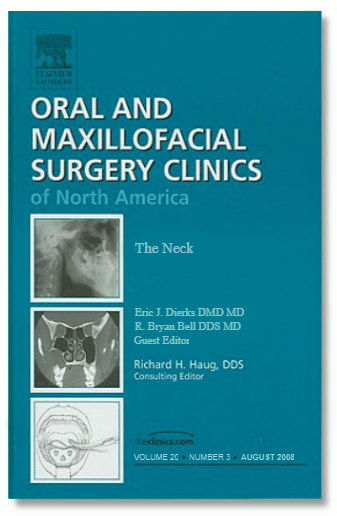
Guest edited by Bryan Bell and Eric Dierks, this comprehensive issue will cover four major areas: general considerations concerning the neck, non-neoplastic disorders, non-squamous neoplasms, and squamous cell carcinoma. Within these areas, the authors discuss radiological techniques, neck masses, infections, fractures, thyroid disorders, salivary gland disorders, lymphoma, and much more! The American Association of Oral and Maxillofacial Surgeons defines oral and maxillofacial surgery as the specialty of dentistry that includes the “diagnosis, surgical and related treatment of diseases, injuries and defects involving both the functional and esthetic aspects of the hard and soft tissues of the head, mouth, teeth, gums, jaws and neck” [emphasis added]. In preparing this issue of the Oral and Maxillofacial Clinics of North America, we recognize that the training of American oral and maxillofacial surgeons in the surgical and nonsurgical management of conditions affecting the neck is varied. We also recognize that our relatively young surgical specialty continues to mature as it advances the education of its members through formal fellowship training in head and neck oncologic surgery, cranio-maxillofacial trauma, pediatric cleft and craniofacial surgery, and esthetic surgery. As the profession matures, there is and will be a need for all oral and maxillofacial surgeons to be familiar with, if not proficient in, the management of a wide variety of cervical disorders. The neck contains seven different organ systems and is one of the most complex anatomic regions in the human body. Any or all of these systems may be affected by a variety of congenital, developmental, and acquired abnormalities, so an interdisciplinary approach to treatment often is necessary. Multiple surgical specialties overlap in this critical area; in addition to oral and maxillofacial surgery they include otolaryngology, plastic surgery, neurosurgery, and thoracic surgery, as well as general surgery and its subspecialties of vascular, trauma, and endocrine surgery. To provide a contemporary and concise review of cervical disorders, we have invited practitioners of a number of these allied disciplines whose areas of expertise complement those of the oral and maxillofacial surgeon to contribute their experience. We are deeply indebted to all the authors for their excellent and timely contributions and gratefully acknowledge the sacrifice of time and energy that is necessary to generate a quality product.
|