|
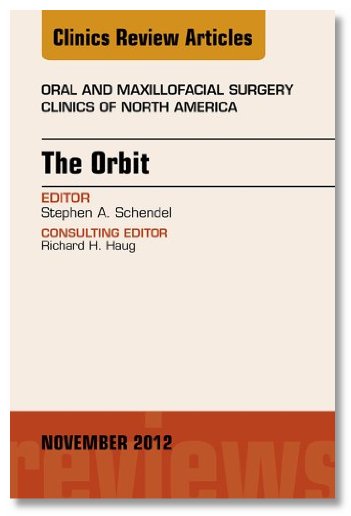
An important review on the orbit for the oral and maxillofacial surgeon! Topics include anatomy, imaging and radiology, growth and development of the orbit, surgical ophthalmology exam, surgical approaches and navigation technology, biomaterials in orbital surgery, orbital trauma, late correction of orbital deformities, orbital tumors, esthetic surgery of the orbits and eyelids, correction of the orbit in craniofacial deformities, prosthetic reconstruction of the orbit/globe, and more! In reference books the orbit is defined as the cavity in the skull in which the eye and its appendages are situated. It is often also thought of as a bony socket. In reality this does not begin to describe the complexity and importance of this structure in the human face. This bilateral 4-sided pyramidal structure is composed of 7 bones and forms the structural boundary between the facial skeleton and jaws and the cranium. Surgery or fractures of the jaws frequently involve the orbit and the surgical approaches and reference points aligned accordingly. Skull trauma especially of the frontal bone also involves the orbit. As Paul Tessier first demonstrated, the best approach to the midface may be intracranially through the orbits. By this deduction, the fields of cranial and facial surgery were forever united, creating a cascade of new techniques and possibilities. The contents of the orbit, the eye and associated nerves, muscles, and glands, are extremely intricate. This adds to the complexity in the diagnosis and treatment of this area. In this text we have set forth the anatomical foundation and principles to diagnose and treat a number of conditions of the orbit and eye. Obviously this is not a complete treatise on the subject but is meant to be of practical use for the surgical specialist. Thus, the articles have been written by specialists with special expertise in the orbit and its contents.
|