|
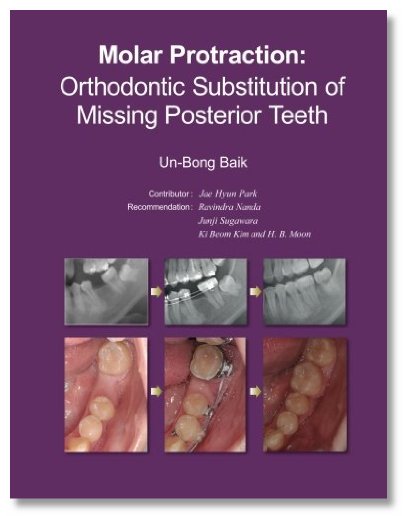
This book is about the substitution treatment of a missing 1st molar with protraction (forward movement) of the 2nd and 3rd molars by orthodontic space closure. It is one of the most recent treatment methods using miniscrews (TADs: Temporary Anchorage Devices). In cases of missing teeth--not only the 1st molar but also other teeth--an implant or prosthetic treatment is usually necessary. However, what if the patient considers receiving orthodontic treatment after an implant or prosthetics? Orthodontic treatment would become very difficult because an implant or prosthetics would prohibit orthodontic teeth movement. Figures on the front cover of this book show that the 2nd and 3rd molars have mesially drifted to the missing 1st molar space. The formerly impacted (unable to come in) 3rd molar erupted (came in) properly. Therefore, the 2nd and 3rd molars can function as the 1st and 2nd molars, respectively. In this case, troublesome extraction of the impacted 3rd molar and an implant or prosthetic treatment was unnecessary. Is this possible in all cases? If yes, then to what extent? Would there be any other problems in the periodontal and root structure? The substitution treatment of a missing 1st molar may also have its own risks, but if successful, it can largely benefit patients. This book is an organization of the 110 cases that I have treated, discussing both the positive and negative aspects of the concerned treatment. In addition, this book highlights missing space closure of the 1st molar because it is the most difficult type of orthodontic space closure. The missing space of other teeth is generally easier to close. Prosthodontic, endondontic, or periodontic doctors may have more chances to meet patients who have missing teeth than orthodontic specialists. I?d like to suggest that these doctors take this orthodontic treatment into consideration. Patients, as well as dentists, must be aware of various treatment options, including orthodontic treatment methods. I hope it can be a good option for missing teeth.
|