|
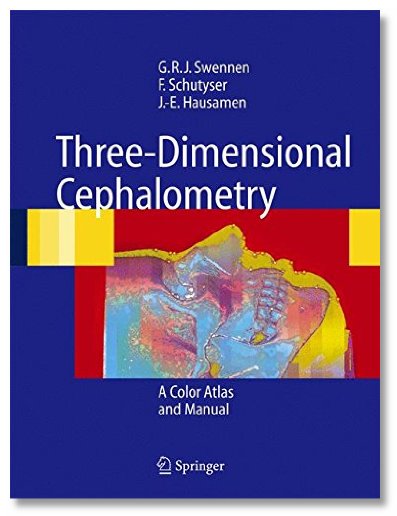
The development of low-dose acquisition techniques such as cone-beam tomography will make three-dimensional (3D) imaging of the head and neck ubiquitous for all specialists working in this anatomical area within a decade. Although this book deals primarily with the higher dose multi-slice spiral computed tomography (CT), the principles are directly transferable to lower dose cone-beam tomography. This subject is therefore of importance to all orthodontists, oral and maxillofacial surgeons, and restorative dentists. Up to now, a clear schema for the analysis of 3D images of the head and neck in a way analogous to two-dimensional cephalometry was missing; this book fills the gap. This book is divided into 10 chapters which take the reader through the basics of CT imaging of the head, the interpretation of multi-planar CT slices, to the development of a 3D cephalometric reference system. Upon this reference system, the identification and verification of 3D hard and soft tissue cephalometric landmarks are explained and the construction of 3D cephalometric planes is described. From these principles, a comprehensive chapter on 3D cephalometric analysis emerges and is followed by a thoughtful chapter on 3D cephalometry and craniofacial growth. Three cases, which demonstrate the use of 3D cephalometry in the diagnosis, planning, and post-operative evaluation of patients are included, that is with loss of the right condylar process due to malignant external otitis, hemifacial microsomia, and reconstruction of the left mandibular body and condylar process as a result of recurrent malignant disease, are presented in a chapter on clinical applications. All the cases demonstrate the value of 3D imaging, analysis, and modelling techniques integrated with therapeutic techniques such as distraction osteogenesis, mandibular osteotomy, stereolithography, the production of custom-made surgical guides, and microvascular reconstruction surgery. The outcomes are excellent. The book ends with a chapter on the future development of 3D cephalometry which realistically identifies the limitations of the technique and how they may be overcome in the future. This book cleverly combines its role as a manual and atlas by succinctly and thoughtfully explaining the basis of each chapter which is then lavishly illustrated with numerous annotated images. It therefore succeeds in being both a highly informative manual and a valuable reference atlas.
|


 (
(