|
|
|
| Product Description: |
|
| |
|
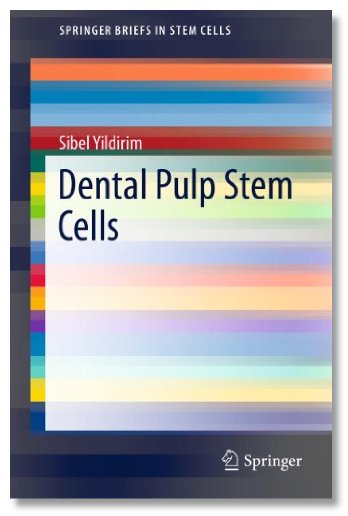
Stem cell technology is moving forward at a tremendous rate. Recent discoveries have surprised even the most expert researchers. While every piece of new data broadens the current knowledge and contributes to this moving forward, the new data also serve as paradigm shifters of fundamental knowledge of cell biology. While the question ?What is a Stem Cell? may now seem to basic to even discuss, there are still some discrepancies, however, between groups in terms of their functional roles. Teeth develop from the ectoderm of the first branchial arch and the ectomesenchyme of the neural crest. Deciduous teeth start to form between the sixth and eighth weeks, and permanent teeth begin to form in the twentieth weeks. Several studies have demonstrated that the pulp from both adult teeth and deciduous teeth contains dental pulp stem cells. Several factors have made them very attractive as a model system for many researchers; they are multipotent, ethically and non-controversially available in large numbers, immuno-compatible, developmentally primitive, easy to isolate and have high expansion potential in vitro. However, many controversies still exist in the field. There are several unanswered questions in the biology of dental pulp and odontoblasts. This new volume in the SpringerBriefs in Stem Cells series presents an evaluation of stem cells from human dental pulp as a reliable stem cell source for cell-based therapy to stimulate tissue regeneration.
|
|
|
| |
Most Helpful Customer Reviews:
Add Your Own Review |
 Perfect companion if you're researching in DPSC's!, September 03, 2014 Perfect companion if you're researching in DPSC's!, September 03, 2014
By ReligionFlag
|
|
Im an endodontist researching in DPSC's and this book has saved a lot of my time reading many papers, it covers almost all the topics needed, In conclusion, it answered a lot of questions in mind and gave a clear idea on my research.
The only issue is that It doesn't cover a lot about iPSC's in dental regenerative therapies and it needs to be reviewed a little, but in general it's the perfect companion if you're researching in DPSC's!
Was this review helpful to you?
|
|
|
|
|
|
|