|
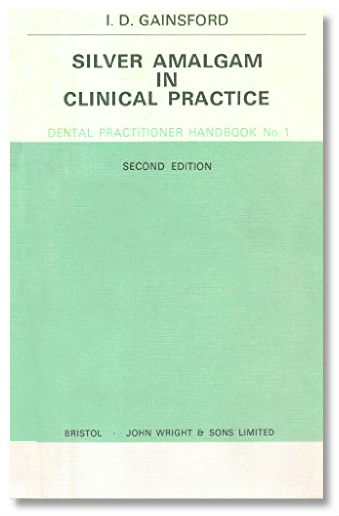
The development of competing restorative materials continues apace, yet silver amalgam still remains the most commonly used. Indeed, it seems likely that amalgam will continue to be employed, as a restorative material, for many years to come; Brown (1988) was particularly optimistic, stating that its use, in conjunction with other contemporary materials, could give amalgam "a new lease of life". However, it seems certain that amalgam should not, and will not, continue to be used in the "traditional" way described in the previous editions. Major changes in the provision of dental treatment, particularly in relation to prevention, maintenance, and, when indicated, a very conservative approach to tooth preparation, have necessitated a major review of this handbook.In particular, two new chapters emphasize a preventive approach to conservative dentistry and remind the reader of the dangers of unnecessary operative intervention. We hope that a sensible balance has been struck between the extremes of "over-prescription" and "supervized neglect". A third new chapter is devoted to the use of other contemporary materials, in combination with amalgam, considered by Coombe (190) to be perhaps the most exciting current developmetn in the use of silver amalgam. Despite the recent introduction of adhesive amalgam techniques, and the paucity of clinical trials, we consider (with appropriate reservations) the potential benefits that may accrue from these techniques, or future developments, to necesitate their inclusion in this handbook. The text of the remaining chapters is extensively revised, to take account of recent thought and research in the various clinical aspects of restoration using silver amalgam, and to try to redress the errors and omissions found in the second edition. The chapter describing cavity preparation is largely re-written to reflect a more conservative approach, while the text detailing the problem of mercury toxicity is considerably enhanced, to mirror public and professional concern.
|