|
|
|
|
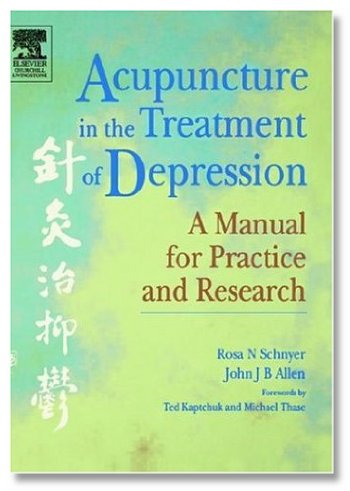
Acupuncture in the Treatment of Depression: A Manual for Practice and Research, 1e
|
 (2 Reviews) (2 Reviews)
|
|
|
Availability:
|
|
|
Published:
|
September 21, 2001 |
|
Binding:
|
Paperback
|

|
|
|
| |
Most Helpful Customer Reviews:
Add Your Own Review |
Ground-breaking Initial Work., February 15, 2010
By Quadradox
|
|
The authors have chosen a fairly specific niche. They accomplished their purpose very well. Given the vast number of people now afflicted with depression in our society or else will be at some time in their lifespan, and given its toll on health, quality of life, and on basic economic survival -- this is not a narrow niche. It has broad applicability to us all. The authors' intent was to create a solid communication bridge between practitioners of western & eastern medicine (especially with respect to acupuncture)in order to: a) define the nature of depression as understood in both paradigms, and b) to create a standardized and research-"able" protocol for assessing acupuncture's efficacy for treating the more common forms of depression.
In addition, they hoped to make it highly readable to persons entering the exploration from either a western or eastern background. Again, I feel they succeeded nicely. My impression, however, was that they invested a great deal more effort to explain mostly TCM-derived potential mechanisms for qi, blood, and organ disharmonies as they might apply to various manifestations of depression. They freely admit doing so was a significant challenge to generalize from either ancient chinese thought or the more modern TCM constructions onto a "western disease", because "major depression" is not historically a chinese diagnosis. Yet, classic Chinese Medicine does employ a concept fairly close to bipolar or manic-depressive states and when relevant, these understandings have been included. On the whole the book may seem more enlightening to a "western" reader wishing to gain a broader perspective on the illness from an eastern standpoint. I am not yet sure whether practitioners of oriental medicine would likewise feel that their needs were met to receive sufficient details regarding the western understanding of depression either from psychotherapuetics, neurosciences, or neuropharmacology.
Given that these research methods are focused on acupuncture strategies, the last half of the book is approprately devoted to outlining a systematic method for pattern diagnoses, tables of the relevant symptoms, physical exam findings (pulse and tongue diagnoses), and primary plus supplemental points to use in treatment. They also do an excellent job in detailing the rationale behind these assessment and treatment approaches. This is understandably difficult to come up with a system whereby multiple observers (coming at it either from an eastern or western background) would have a reasonable chance at arriving at a replicable assessment. It is "meaty" book with little fluff. Their work pioneer work sets a high standard for subsequent research to follow.
I very much appreciated their conscientious effort to balance needs of scientific inquiry (systematizing and standardizing as much as reasonably possible) with the reality that humans are incredibly diversified and complex, and most will ultimately refuse to be stuffed into tidy categories. Yet it was a commendable effort, a very reasonable starting point which will have to be verified and extended in clinical use. Their approach seems to be structured in a manner which respectfully incorporated chinese diagnostic and treatment concepts in their own terms, rather than cut and pasted to satisfy a particular prized western model.
Several influential leaders appear to have been consulted in order to cover the range of theories in Chinese Medicine. I believe that a clear and honest effort was made to avoid bias favoring western theories. Thus, the works of Bob Flaws, Mark Seems and Maciocia are acknowledged as substantive resources. I was a bit disappointed that there was much heavier emphasis on TCM constructs rather than on meridian-based therapy models or French-Chinese Energetics. Thus, if I wished for Volume 2 -- it would be one that gave attention to strategies which address more thoroughly the movements of qi either through the 5 phases or the merdians.
Even more importantly, I would like to see future research protocols which intentionally integrate patient-participation in their own treatment -- such as qigong techniques that supplement acupuncture effects between treatments. There is a lot to be said for self-empowerment as an antidote for depression. Regardless whether the practitioner is handing out pills or needles -- the person suffering from depression often needs an effective tool that operates under their own power and on their own timetable!!!
2 of 3 people found the above review helpful.
Was this review helpful to you?
|
|
|
|
Interesting!!!, July 19, 2004
By Armando R. Neves Nt
|
|
"Acupuncture in the treatment of Depression" is interesting, because link east and western therapeutics.
1 of 15 people found the above review helpful.
Was this review helpful to you?
|
|
|
|
|
|
|