|
|
|
| Product Description: |
|
| |
|
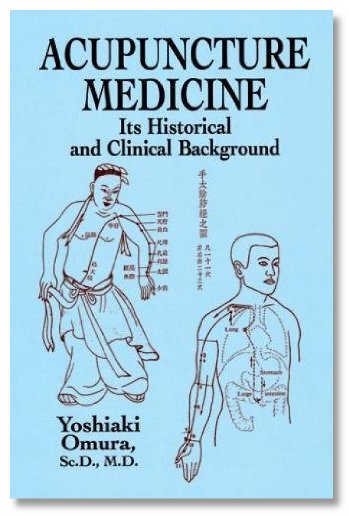
Many ailments that resist treatment by conventional Western biomedicine often respond favorably to the approach and practices that comprise the ancient Chinese healing art of acupuncture. Based on the cumulative store of knowledge and experience of several centuries of Eastern medicine, acupuncture seeks to restore, promote, and maintain good health, a goal inextricably bound to disease prevention. The author of this work, Yoshiaki Omura, is a physician, educator, electrical engineer, and experimental physicist who was born in Japan and came to the United States in 1959. Among his many impressive credentials and illustrious achievements, he performed the first acupuncture analgesia for surgery outside of China in 1972 at the University Hospital of Albert Einstein College of Medicine. This highly publicized event stimulated research in acupuncture not only in the United States, but also in Europe and elsewhere. To date, Professor Omura has published six books and over 200 articles in professional journals on the subject of acupuncture, and he continues as a pillar in the field. Starting with a historical background, including the origins and meanings of concepts essential to the practice of acupuncture, the text discusses the anatomical and pathophysiological concepts of Oriental medicine, and concludes with a detailed review of diagnostic methods. This comprehensive history is certain to be of value to lay practitioners as well as healthcare professionals.
|
|
|
| |
Most Helpful Customer Reviews:
Add Your Own Review |
 Five Stars, January 09, 2015 Five Stars, January 09, 2015
By EB
|
|
Excellent
0 of 1 people found the above review helpful.
Was this review helpful to you?
|
|
|
|
Acupuncture -- a powerful even revolutionary book written by a 20th century genius of TCM, April 29, 2014
By Dr. Scott Cuthbert
|
|
Dr. Yoshiaki Omura is one of the hardest working, eclectic and innovative acupuncturists in the world. His textbook covers both standard Traditional Chinese Medical approaches IN DEPTH, but also many ground-breaking methods of analysis for meridian imbalances. Dr. Omura includes several other approaches in the Acupuncture armamentarium against disease. He is concerned with diet, and use herbs to balance body chemistry. Massage and manipulation are used, including the manual muscle test developed in Applied Kinesiology. The psychological aspects of health are also shown in this book to correlate with the philosophy of acupuncture.
Acupuncture not only garners the attention of the world as a vitalistic philosophy of health but also in terms of pain and pain control. It has been shown repeatedly that acupuncture is effective in treating pain; it works 70% to 85% of the time, far greater than the placebo, which only has about 30% efficiency. Dr. Omura has offered detailed summaries of modern research into the potential mechanisms of acupuncture. Acupuncture Medicine: It's Historical and Clinical Background is a classic, even revolutionary guide on the theory and practice of Chinese medicine. This accessible and invaluable resource has earned its place as the foremost authority in the synthesizing of Western and Eastern healing practices. I learned more in several weeks of reading this powerful textbook than I had in years of study before.
One of the methods used by the Western natural health care doctor is applied kinesiology, which uses the body's muscle strength to evaluate nerves, nutrition, and other factors involving health. Dr. Omura saw the importance of this for diagnosis of acupuncture imbalances, and he studied with Dr. Goodheart, the founder of AK. Omura came to see that the "O-ring test" -- a manual muscle test -- and therapy localization as developed in AK, made acupuncture meridian imbalances far easier to diagnose and treat, especially for western acupuncture practitioners. Fortunately for the health of hundreds of thousands in the Western world, East and West have met with the application of meridian therapy in applied kinesiology and Dr. Omura's natural health care approaches. Using manual muscle testing and Dr. Omura's and applied kinesiology methods, the meridian system can be evaluated to determine which meridians are overactive and which are underactive. In AK, if a meridian is underactive, a muscle associated with the energy level of that meridian will test weak; if a meridian is overactive, a muscle associated with that meridian will also be overactive. Use of the classic acupuncture points and other treatment methods restores immediate balance in the meridian, and the muscle returns to its normal strength.
Stimulation is usually done with digital pressure administered by the doctor; it is not uncomfortable to the patient. The stimulation or sedation of an acupuncture point can also be done by the classic method of acupuncture needles, as the acupuncturists traditional do.
This textbook is fantastic, and will grow your appreciation of the science and the subtleties of Traditional Chinese Medicine. Highly recommended!
Dr. Scott Cuthbert, author of Applied Kinesiology Essentials: The Missing Link in Health Care (2014), and Applied Kinesiology: Clinical Techniques for Lower Body Dysfunctions.
2 of 2 people found the above review helpful.
Was this review helpful to you?
|
|
|
|
Should be great, July 11, 2009
By Judith Goldsmith
|
|
I haven't read this book yet, but I have studied with Dr. Yoshiaki Omura, who is an amazing healer and medical researcher, and he doesn't publish much outside of medical journals, so I would bet we're very lucky to have this explanatory text. Dr. Omura is a western-trained M.D. who started looking into Chinese traditional medicine to debunk it, but changed his mind when he saw the healing he was able to achieve with extremely problematic patients that other doctors kept sending him.
5 of 9 people found the above review helpful.
Was this review helpful to you?
|
|
|
|
|
|
|