|
|
|
Most Helpful Customer Reviews:
Add Your Own Review |
 Incomplete, Uninformed and Dangerous, July 30, 2011 Incomplete, Uninformed and Dangerous, July 30, 2011
By S. A. Ajmani
|
|
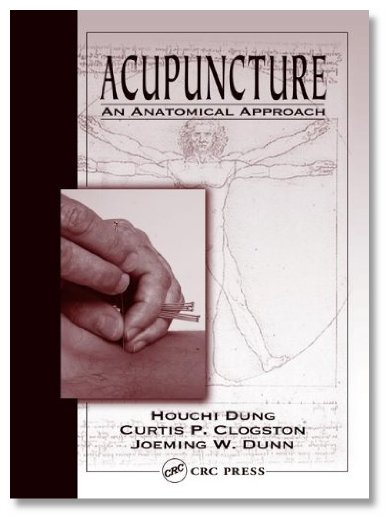
I enjoyed this book's objective analysis of acupoint nerve innervation; however, the overall tone of the book suggests the author has deluded himself into believing he is superior to licensed acupuncturists who have had far more training in the field than he. He dismisses the potential risks for pneumothorax when needling chest points as "highly unlikely" and regards effects of acupuncture such as decreased blood pressure and improved fertility as mere "transient side effects", stating that acupuncture is only good for pain management and has no other therapeutic benefit. He completely fails to coach the reader on points that can cause spontaneous abortion during pregnancy, then states that acupuncturists have no real medical training, again demonstrating his lack in understanding the field as a whole.
Practitioners of Chinese medicine in the USA undergo rigorous standardized medical training including histology, anatomy, physiology, pathology, pharmacology, Western diagnostic methods and medical lab/imaging. Most states require acupuncture students to take a biomedical board exam before they are granted licensing. While I understand that the author needs to cater to the egos of his readers (mostly other MDs), his gross misrepresentation of acupuncture and blatant disregard to the scrupulous and detailed training it takes to become competent as a practitioner of Chinese Medicine boggles my mind and frightens me on behalf of his patients.
The author also decided to rename acupoints that were standardized by the Geneva Convention a few decades ago, which not only insults the field and its practitioners but also dismisses over 4000 years of rich Chinese medical history. All in all, this book provides some decent insight for acupuncturists who have completed a 4 year program in Chinese Medicine, but is IS NOT an adequate quick guide for medical doctors to use in place of an acupuncture license. There are no short cuts to becoming a quality practitioner of integrative medicine, so please honor the oath of doing no harm to your patients and seek training at an accredited university before incorporating acupuncture into your medical practice.
7 of 8 people found the above review helpful.
Was this review helpful to you?
|
|
|
|
 Anatomic based acupuncture, January 15, 2009 Anatomic based acupuncture, January 15, 2009
By Ayman Abdel-halim
|
|
I have been using this book by Dr Dung the last three years.It is a revolutionary book in Acupuncture.You can say this is the Western approach to this complex field.I salute Dr Dung for his enormous effort and research.I do recommend also the Biomedical approach to acupuncture as a companion book,it helps clarify Dr Dung's approach.
Was this review helpful to you?
|
|
|
|
Two Thumbs Up, January 13, 2006
By Craig J. Amnott (Philadelphia, NY)
|
|
I am an actively practicing Osteopathic Family Physician. I incorporate a lot of manipulation and trigger point injections into my practice. I have been studying acupuncture (Traditional Chinese Medicine) now for about six months. TCM acupuncture is difficult for my western trained brain to grab a hold of and to be able to put into practical application. Anatomical Acupuncture is a breath of fresh air. This is a book that I, again as a western trained physician, can immediately grasp and immediately implement in my own clinical practice. I have already begun treating a few select patients based on what I learned in this book and am already seeing postive clinical outcomes. I highly recommend this book to you. You won't be disappointed. Well worth the investment.
10 of 11 people found the above review helpful.
Was this review helpful to you?
|
|
|
|
Without the hocus-pocus, March 30, 2005
By Benjamin Pimentel (United States of America)
|
|
Insightful book that attempts to explain acupuncture from a scientific physiologic bent without the hocus-pocus found in a lot of acupuncture books written today.
After reading a lot of acupuncture books about the weird "pulse diagnosis," the mysterious "chi" (from those Kung Fu movies where the Kung Fu fighters all seem to have superhuman abilities--maybe the NBA should sign them up for a multimillion dollar contract, they should play a mean game of basketball), and those strange chi "meridians" that connect the "triple burner" to the "governor vessel" to the kitchen sink and how acupuncture should only be performed by a man with a red carnation at certain times of the day when the sun and moon and Mercury and Jupiter are in "harmony" with each other under the direction of an astrologist who is wearing green suspenders, I got so sick that I just wanted to vomit.
This book cuts out all those outdated, mystic, superstitious, ideas that were used to explain acupuncture in medieval times, and brings it more into accord with 21st Century thinking grounded on the laws of physics, chemistry and physiology.
It's been a breath of fresh air reading this book.
5 of 26 people found the above review helpful.
Was this review helpful to you?
|
|
|
|
A logical, medical science based approach to acupuncture, November 18, 2004
By Louis H. Esquivel
|
|
As a physician, I have found Dr. Dung's approach offers the most logical and reasonable means of understanding and using acupuncture as a pain relieving modality for everyday clinical practice. A simple review of a bit of gross anatomy (emphasizing the peripheral nervous system) is recommended. Any well motivated and prudent physician can begin using this information fairly rapidly and will soon see that allegiance to "Yin/Yang" theory and other philosophical constructs is unnecessary. Neuromodulation is based on basic science research and is the logical basis of this wonderful (but underutilized) modality. I highly recommend this book to any physician/dentist who has had interest in acupuncture but was turned off by the metaphysical baggage it has carried (until now).
3 of 11 people found the above review helpful.
Was this review helpful to you?
|
|
|
|
|
|
|


 (
(