|
|
|
|
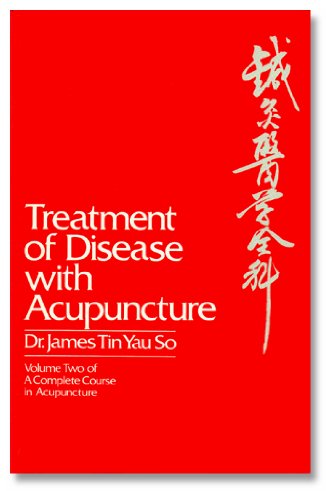
Treatment of Disease by Acupuncture (Treatment of Disease with Acupuncture)
|
 (1 Reviews) (1 Reviews)
|
|
|
Availability:
|
|
|
Published:
|
September 1, 1987 |
|
Binding:
|
Hardcover
|

|
|
|
| |
Most Helpful Customer Reviews:
Add Your Own Review |
A Great Alternate Take on Acupuncture, July 29, 2011
By Practitioner of Chinese Martial Ar..
|
|
James Tin Yau So was a founder of the New England School of acupuncture, one of the first acupuncture schools in this country. His education predates the current TCM style and therefore his methods don't adhere to the current trend acupuncture has followed in China. Because he covers basic theory, diagnostic methods as well as descriptions of treatment of disease by acupuncture, the book has far more use than just being a formulary, though it fulfills that function also. He describes many diseases by their western name, lists symptoms and signs and suggests point combinations for their treatment. Like his grand-teacher Cheng Dan An, So likes to needle in particular order. Many treatments list a 3 tier structure, encouraging practitioners to needle in groups starting with what he believes are the most important points. (Cheng Dan An's book lists an exact order with times listed for twirling each needle) The key to making this book and its companion volume most useful is to acquire his point indications first which then give a rationale for the points suggested here. This helps us figure out what his reasons were for picking points and makes it easier for us to use his point formulae. After all, if we needle without having a reason for a point, we're encouraging rote application rather than the use of the knowledge contained in So's works. We'd be frauds if we fell into that habit. I've found, as I did in So's grand-teacher Cheng Dan An's formulary that acupuncture can indeed effectively treat a large number of conditions. If you've been educated recently in the prevailing TCM style, this book could be quite useful to your development. I think it uses many point combinations that we know, and yet does have many unique uses for points and combinations that I did not see much of in school as well. The point book has descriptions of what the qi sensations of each point should be like, and this book gives suggestions about how many treatments it may take to deal with a given condition, something which is useful for educating patients. This book is fairly unique among acupuncture books and despite being out of print, it is a useful handbook for acupuncturists. Even if you are an herbalist also, this book and its companion could give you the confidence in acupuncture you may not have had before. One negative is that there are a few wild ideas presented by So that modern practitioners may scoff at. Some parts of the text seem dated, like needle sharpening techniques, but that is nothing compared to what good things you can get from this book. Get it if you can!
1 of 1 people found the above review helpful.
Was this review helpful to you?
|
|
|
|
|
|
|


