|
|
|
| Product Description: |
|
| |
|
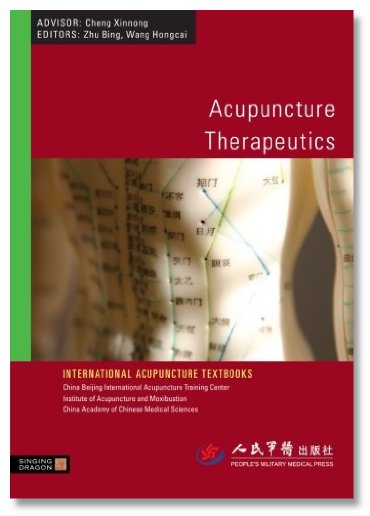
Acupuncture can be a very effective way of strengthening the body's resistance to illness, and of eliminating potentially harmful pathogens. This book provides a complete overview of the principles involved in distinguishing between different syndromes of illness in patients, and of selecting and administering appropriate treatments. The book describes the functions of acupuncture within the wider context of traditional Chinese medicine, and explains the principles involved in identifying and treating different illnesses and complaints. A large portion of the book is devoted to describing how to diagnose and treat more than 130 different conditions, including headaches and angina, asthma, depressive disorders, dementia, and acne. This comprehensive textbook, compiled by the prestigious China Beijing International Acupuncture Training Center (CBIATC), under the editorial directorship of leading Chinese practitioners Zhu Bing and Wang Hongcai, is an invaluable reference for the advanced student or practitioner of traditional Chinese medicine.
|
|
|
| |
Most Helpful Customer Reviews:
Add Your Own Review |
 Might have been an okay book if it were readable., October 25, 2011 Might have been an okay book if it were readable., October 25, 2011
By R. Suvarna (Las Vegas, USA)
|
|
This was one of the text books (by the same authors- this one probably being the best of the miserable lot) required/provided for the Advanced acupuncture program at CBIATC (China Beijing International Acupuncture Training Center). The series lists professor Cheng Xinnong as adviser and copies some of the content and line diagrams from his text 'Chinese Acupuncture and Moxibustion'(CAM). The texts content more or less exactly mirrors what CBIATC offers on their distance education site TCMOO.com. I have been unfortunate enough to suffer through it in both forms.
Onto the book review. First, the content of this book is not any different from any of the other general acupuncture therapeutics texts out there. It does cover several conditions and discusses the differentiation of syndromes in some detail. It, however, added little to my understanding of the subject unlike some of the other excellent texts out there. Second, the concept of an hiring an editor who is fluent or even conversant in English, seems not to have occurred to the publishers. For example opening a random page and reading here is what I see verbatim on the first sentence - "Simple obesity: it is a kind of disease, in which, practical body mass is over standard body mass by over 20% without apparent endocrinal-metabolic reason and with protein increase due to retention of water and sodium or muscular body excluded.". I know the definition of obesity but this one still manages to befuddle me. The language throughout is in the form of someones class notes taken half asleep, there is no attempt to make it coherent or even readable. Third,it appears to avoid the trap of people complaining of an incomplete index as I see on some other reviews on some publications the publishers/authors opted simply leave one out. Fourth, the 'Forward' states that the publication of the book was hurried and "Thought the whole team worked hard to guarantee the quality, errors and omissions may still exist." This was in 2009. It is now the end of 2011 and nothing has been corrected. They continue to sell a defective half baked product and moreover state this to be the successor to Xinnong's CAM. Simply unacceptable. The few errors in the CAM book have persisted through 30 years of reprints, so if that is the set precedent, I don't think I will need to reconsider this line of books again.
One caveat though. If you are bent on considering the internet program at TCMOO.com through CBIATC, maybe consider buying/borrowing one of these books (Basic Theories/Meridians and Acupoints/Diagnostics of TCM/Acupuncture Therapeutics) as a less expensive way to get a feel for what you are in for.
3 of 3 people found the above review helpful.
Was this review helpful to you?
|
|
|
|
|
|
|