Categories
Home
Books
Magazines & Journals
Self-Help
Children's Books
New Releases
Alternative Medicine
Anesthesiology
Basic Sciences
Behavioral Science
Board Review Preparation
Caries and Cariology
Cosmetic Dentistry
Dental Anatomy
Dental Anthropology
Dental Assisting
Dental Hygiene
Dental Materials
Dental Morphology
Dental Nursing
Dental School Application
Dental Technology
Economic Reports
Emergencies
Endodontics
Forensic Dentistry
Geriatric Dentistry
Gnathology and Occlusion
History
Implantology
Laser Dentistry
Nutrition
Operative Dentistry
Oral Medicine
Oral Pathology
Oral Radiology
Oral Surgery
Orofacial Pain
Orthodontics
Aligners
Appliance Design
Lingual Orthodontics
Orthodontics Implants
Orthognathics
Pediatric Dentistry
Periodontics
Pharmacology
Practice Management
Preventive Dentistry
Prosthodontics
Public Health
Reference
TMJ
Apparel
Dental Artwork
Dental Health Products
Dental Loupes
Dental Office Supplies
Dental Photography
Dental Supplies
Jewelry
Patient Education
Software
Toys, Games and Novelties
Videos
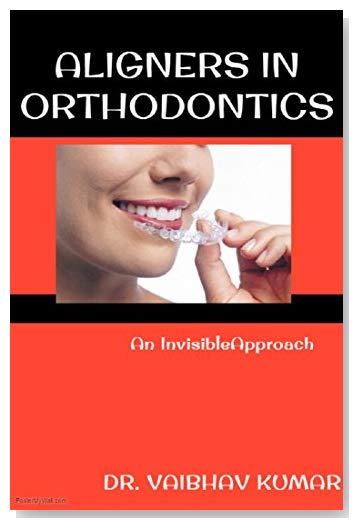
Aligners in Orthodontics
By Vaibhav Kumar BDS MDS, Puneet Batra BDS MDS MOrth, Saurabh Sonar BDS MDS and Amit Srivastava BDS MDS
Availability: 
Publisher:  Independently Published
Edition:  1st
Published:  March 29, 2018
Binding:  Kindle
check price
buy from Amazon
 
Product Description:
 
Aligners in orthodontics is a latest technology that has evolved in an attempt to achieve improved tooth alignment and occlusion. Among the various clear aligner treatment modalities available to orthodontists today, Invisalign is one of the most widely recognized, developed by Align Technology Inc in the late 1990s. Invisalign uses three dimensional. An alternative for fixed orthodontic appliance is Invisalign which has been available since 1999 and offers not only the advantage of better esthetics but also the convenience of removal during food and beverage consumption, as well as oral care. (3-D) technology to create a series of aligners to move teeth. The use of clear aligners to produce orthodontic tooth movement (OTM) provides an opportunity to measure incremental movement and investigate factors that might affect the rate of movement. Clear aligners with sequentially programmed movement provide an excellent model for investigating tooth movement. A single tooth can be isolated, and frequent measurements made with polyvinylsiloxane or digital impressions provide incremental information regarding the pattern of movement.
 
Be the first to add a review
Copyright © 2026 dentalBookshop.com. All rights reserved.