|
|
|
| Product Description: |
|
| |
|
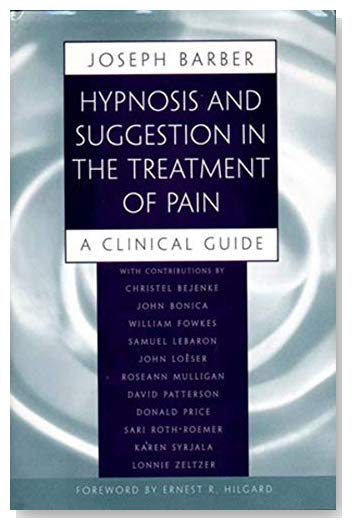
When a patient's suffering is not adequately managed by the best medical interventions available, the clinician may feel at a loss. This book offers guidance from the field's most respected experts on the psychological assessment and treatment of pain, particularly with hypnosis. It covers both syndromes of special interest (cancer pain, recurrent pain syndromes, headache, burn patients, etc.) and special populations (children and the elderly).
|
|
|
| |
Most Helpful Customer Reviews:
Add Your Own Review |
 Useful, but read with caution, March 28, 2003 Useful, but read with caution, March 28, 2003
By A customer
|
|
Overall there is some very useful information in here on the uses of hypnosis for pain control. It is written for clinicians, and so is free of some of the fluffier and more new age leanings of some other books on the subject. The potential buyer should be aware, however, that this is not a book with script ideas or lots of practical advice on how to phrase hypnotherapy sessions with pain patients. Rather, it provides an extensive overview of issues related to dealing with different kinds of pain patients and suggests how hypnosis is useful in these situations.
One aspect of the book that bothered me was that it seems to suggest that pain without an obvious cause--which is often the case with chronic pain--is more likely to be psychosomatic in nature. In one passage it advises the hypnotherapist "to expect significant psychological factors in the maintenance of the patient's pain" if that patient "uses unusually colorful terms" to describe the pain, such as saying that it feels like "fish hooks" or "a red hot poker." One should be careful in making such sweeping generalizations. Intense burning sensations that patients might indeed describe as hot pokers that comes without an obvious physical cause, or that lasts long after an initial injury, is a classic description of Reflexive Sympathetic Dystrophy pain, or what is more commonly now called Complex Regional Pain Syndrome. There are also many instances of inflammatory or nerve pain that is not easily diagnosed and that can feel like torture for the sufferer. It is extremely difficult, also, to describe different pain sensations. "Colorful language" or even odd descriptions that might not make a lot of anatomical sense is not necessarily a clue that the pain is largely psychological in nature. More recent developments in the study of chronic pain confirm this.
28 of 32 people found the above review helpful.
Was this review helpful to you?
|
|
|
|
 Beyond Pain, May 18, 2001 Beyond Pain, May 18, 2001
By leonard cardinale (Goshen, NY)
|
|
This book goes beyond simple suggestion for pain. It encompasses the psychology of pain, which includes somatic, neuropathic and procedural pain. This book is an absolute must for anyone interested in pain management.
11 of 16 people found the above review helpful.
Was this review helpful to you?
|
|
|
|
Excellent. The definitive text., May 14, 2000
By Robert Fellows
|
|
As a lay person, I found that this book is not only a tool for clinicians, but also provides a valuable explanation of hypnosis for anyone with an interest in psychology. In his introductory chapter, Joseph Barber succinctly defines hypnosis and explains the phenomenon clearly and accurately. He makes the necessary distinctions to dispel myths about hypnosis and separate the hypnotic state from mere suggestion. Barber demonstrates a combination of sensitivity to human needs along with rigorous scientific grounding. It's fascinating reading, and one of the very few books that a novice would need to understand the true nature of hypnosis.
19 of 23 people found the above review helpful.
Was this review helpful to you?
|
|
|
|
|
|
|


 (
(