|
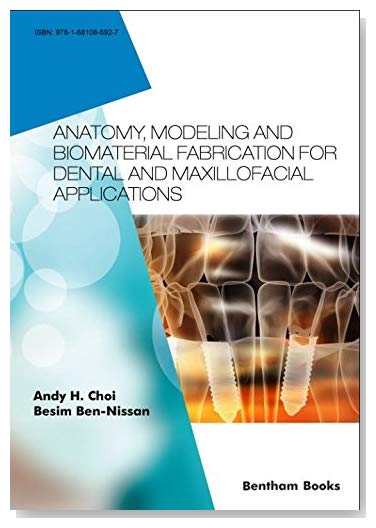
Ceramics have been used as biomaterials for oral and maxillofacial applications due to their excellent bioactivity, high hardness and wear resistance. One of the key drawbacks of synthetic implants is their failure to adapt to the local tissue environment. Improvements in reliability and biocompatibility of implants and prostheses can be achieved through surface modifications including the use of biomaterial thin films and nanocoatings. This book provides readers with information about dental implants and biomaterial fabrication for maxillofacial procedures and dental bone / tissue repair. It is an ideal reference for medical and dental students and professionals (dentists, oral and maxillofacial surgeons, orthopedic surgeons, prosthodontics) who are involved in implantology and tissue engineering. It will also provide valuable insights into the application and production of bioactive materials for any researchers and apprentices in materials science and biomedical engineering. Key Features: - provides basic insights into the structure of bone and the functional anatomy of the skull
- focuses on the applications of mathematical and computerized modelling methodology such as finite element analysis (FEA) in functional loading deformations in dental implant design provides comprehensive coverage on the types of bioceramics and surface modifications currently used in dentistry
- presents information about dental implant production and testing techniques including 3D printing, CAD/CAM technology, and nanoindentation testing
Author Information Dr. Andy Choi is an early career researcher who received his Ph.D. from the University of Technology Sydney (UTS) in Australia in 2004 on the use of computer modelling and simulation known as finite element analysis (FEA) to examine the biomechanical behavior of implants installed into a human mandible (jaw). After completing his Ph.D., Dr. Choi expanded his research focus from FEA to biomaterials and nanocoatings, in particular, calcium phosphate-based nanomaterials for biomedical applications such as drug delivery and tissue engineering. Dr. Choi has extensive experience in the sol-gel synthesis of multifunctional bioceramic nanocoatings and nanocomposite coatings for dental and biomedical applications. His skills also expanded to the mechanical characterizations of these coatings using techniques such as nanoindentation. Dr. Besim Ben-Nissan completed completed his Ph.D in Ceramic Engineering from University of New South Wales in 1988. At present, he is Professor at University of Technology, Syndney. He has worked on the production and analysis of various advanced ceramics (alumina, zirconia, silicon nitrides), sol-gel derived thin films for corrosion and abrasion protection and biocompatibility, as well as optical and electronic ceramics. He is the member of The Institution of Engineers, Australia (1990-), The Australian Society for Biomaterials (1990-), Society for Biomaterials (1989-1995), The American Ceramic Society (1978-), The Australasian Ceramic Society (1977-), American Society for the Advancement of Science (1998-) and International Society for Ceramics In Medicine (1998-).
|