Categories
Home
Books
Magazines & Journals
Self-Help
Children's Books
New Releases
Alternative Medicine
Anesthesiology
Basic Sciences
Behavioral Science
Board Review Preparation
Caries and Cariology
Cosmetic Dentistry
Dental Anatomy
Dental Anthropology
Dental Assisting
Dental Hygiene
Dental Materials
Dental Morphology
Dental Nursing
Dental School Application
Dental Technology
Economic Reports
Emergencies
Endodontics
Forensic Dentistry
Geriatric Dentistry
Gnathology and Occlusion
History
Implantology
Laser Dentistry
Nutrition
Operative Dentistry
Oral Medicine
Oral Pathology
Oral Radiology
Oral Surgery
Orofacial Pain
Orthodontics
Aligners
Appliance Design
Lingual Orthodontics
Orthodontics Implants
Orthognathics
Pediatric Dentistry
Periodontics
Pharmacology
Practice Management
Preventive Dentistry
Prosthodontics
Public Health
Reference
TMJ
Apparel
Dental Artwork
Dental Health Products
Dental Loupes
Dental Office Supplies
Dental Photography
Dental Supplies
Jewelry
Patient Education
Software
Toys, Games and Novelties
Videos
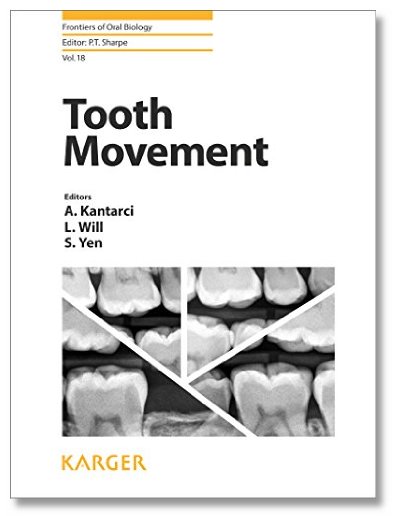
Frontiers of Oral Biology Vol 18: Tooth Movement
By Paul T. Sharpe PhD (Editor), Alpdogan Kantarci DDS MSc PhD (Editor), Leslie A. Will DMD MSD (Editor) and Stephen Yen DMD PhD (Editor)
Availability: 
Publisher:  Karger Publishers
Edition:  1st
Published:  November 24, 2015
Binding:  Kindle
check price
buy from Amazon
 
Product Description:
 
With the intention of improving the rate, quality, and stability of orthodontic tooth movement, those in the field are now moving toward accomplishing this 'acceleration' with minimally or non-invasive methods. New procedures have been widely tested in humans, animal models, and in vitro. While interest is growing both in the industry and at the clinical level, the understanding of the biology is limited. Considering that a simple increase in force will result in tooth morbidity and arrest of the tooth migration, a multi-disciplinary approach is critical for success.

This publication brings together multi-disciplinary expertise on a wide variety of processes related to and involved in orthodontic tooth movement. The premise is that, by better understanding the biological structures and the mechanism through which they respond to biomechanical forces, one can get a better assessment of the 'acceleration'. This work presents research aimed at an improved understanding of conventional and accelerated orthodontic tooth movement from a biological perspective and will be of great value to clinicians, researchers, academics, and students.

 
Be the first to add a review
Copyright © 2026 dentalBookshop.com. All rights reserved.