|
|
|
|
Home > Books > Self-Help > The TMJ Book: How To Get The Right Treatment For The Often Misunderstood Disorders Of The Mandibular Joint
|
|
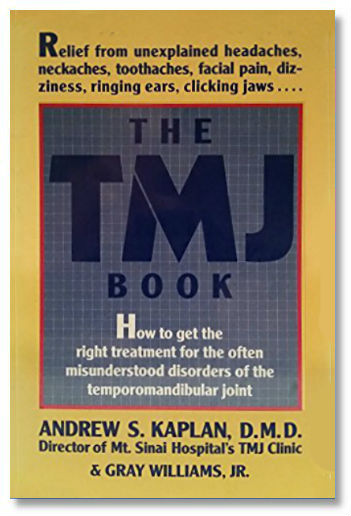
The TMJ Book: How To Get The Right Treatment For The Often Misunderstood Disorders Of The Mandibular Joint
|
|
By Pharos Books
|
 (1 Reviews) (1 Reviews)
|
|
|
Availability:
|
|
|
Publisher:
|
Pharos Books
|
|
Edition:
|
1st
|
|
Published:
|
September 1, 1988 |
|
Binding:
|
Hardcover
|

|
|
|
| |
| Product Description: |
|
| |
|
Temporomandibular joint disorder, known as TMJ, boasts many symptoms: headaches, earaches, jaw clicking or popping, facial pain. The "painful pretender," as it is called, is easily mistaken for other illnesses; it is a powerful mimic. In their fact-filled look at diagnosis and treatment of TMJ, Kaplan, director of the Mt. Sinai Hospital TMJ clinic in New York, and Williams, a medical and science writer, explain some of the ailment's mysteries. At its best when conversational and while discussing case histories, the book is also helpful in its final chapters, which include an assessment of treatment costs and insurance benefits.
|
|
|
| |
Most Helpful Customer Reviews:
Add Your Own Review |
TMJ and Your Sanity, December 11, 2004
By Dr. Carl Edwin Lindgren
|
|
Dr. Andrew S. Kaplan's book is a God sent. It is informative and does not contain the condescending and often cruel and stupid remarks made by other medical doctors who have never suffered from this medical condition. I would consider it the first book you should purchase if you believe you have TMJ. The Summary Self-Help section is outstanding and a must!
Over the past 30 years, I have had the honor and at times responsibility to review numerous books for various journals, magazines and societies. As my background is not in medicine, most of my reviews have been in history, psychology and education.
During this period, however, I have from one time or another suffered from TMJ or Temporomandibular Joint Pain. Sometimes the problem was an offensive click in my jaws or ring in my ears and at other times a severe and limiting condition which causes headaches, neck pain, facial pain, severe toothaches, and the usual dizziness. All TMJ is not alike so please do not compare conditions. YOU know your pain! Also the doctor, unless he has TMJ, does not know or understand the degree of your pain. Pain affects different people, differently.
What are some points mentioned in the book and all others?
1. TMJ may be caused by a physical condition (i.e. being hit in the face by a ball, being in a car accident, whiplash or numerous other physical conditions. It can also be caused by stress which is a psychological condition. NO, this condition does not mean you have a mental problem. It only means that if your have difficulty accepting stress you may grit your teeth or clench you teeth tightly. This clenching usually occurs at night.
2. When you hear a clicking in your jaws or a ringing in your ears, you should consider going to a dentist who is either a specialist in TMJ or one that can refer you. A dental or medical center is the best place to start, especially if pain is present. Skip the local dentist as most do not understand or care about TMJ pain. Also most often your medical insurance plan WILL NOT pay for TMJ if you just go to your local dentist. Finally you are wasting beneficial time.
3. Does the pain go away? Some times the pain and clicking does go away. If it does it will probably come back. Especially after you eat the next big steak or hard candy.
4. You must take control and become aware of the various important aspects of the condition. This book is a very good place to start. Beware of any doctor who may on the first visit, say it is merely in your head (psychological) or that you must have surgery, braces or extensive dental work. Always use conservative action when working with TMJ conditions.
5. The first thing to do is immediately stop eating hard foods. Certainly you should stop eating meats (steak and pork), hard candy and junk food which can cause sugar overloads and stress.
6. Do not ever hold a pen or pencil in your mouth or cradle a phone to your jaw.
7. I have discovered from most books on TMJ and personal experience that very soft foods (whipped potatoes, lima beans, squash, milkshakes, vegetable drinks, soft cooked vegetables, FISH, and chicken) are the first line of defense. NEVER chew gum.
8. Ask your doctor to make you a night guard (mouth piece or splint) which is very inexpensive and may "correct" your condition nearly immediately. The splint may reduce pain, allow healing and remove certain habits of clenching.
9. Medication is in many cases a must. Take as few as possible. Although NOT a medical doctor, from personal experience a muscle relaxant (Skelaxin) and anti-inflammatory (Mobic, Bextra, etc.) work best. The best and "safest" medications for TMJ are simple Tylenol and aspirin. Some people have to go on stronger drugs to kill the pain. If you do need a stronger medication, find a good Chronic Pain Clinic. Most doctors have never had TMJ and do not understand or care about the pain component. Addiction is bad but suicide is worse!
10. Initially most specialists agree that you should start with a flat-plane splint. This splint will not do damage to your teeth formation and usually works. If not, you may have to move up to a repositioning splint. These can cause change in the formation of your mouth (teeth) and should NOT initially be used.
11. It is always good to try some massage, trigger-point therapy, physical therapy, exercise and a TENS (transcutaneous electrical nerve stimulation) unit. If these therapies hurt, most good doctors will tell you not to use them.
12. Make sure you know the problem through a good set of examinations, x-rays, CT, and MRI. One experience of each is enough and there is no need of traveling from doctor to doctor having the same tests done and redone.
13. Start working on your posture. This book tells you that it is one of the most important things to do when battling TMJ. All good books say the same.
14. You should cope with stress by using hypnosis, counseling, relaxation techniques and biofeedback.
15. Finally do not spend all your money on numerous trips to different doctors. Find one doctor that works and stick with him/her. Work with your doctor to arrange your treatments (types, times and reasons). Take control.
16. If you ever wish to talk to another TMJ sufferer, contact my office at celindgren@panola.com
Prof. Dr. Carl Edwin Lindgren, DEd
Former Fellow of the Royal Society of Health (Lond)
14 of 15 people found the above review helpful.
Was this review helpful to you?
|
|
|
|
|
|
|