|
|
|
| Product Description: |
|
| |
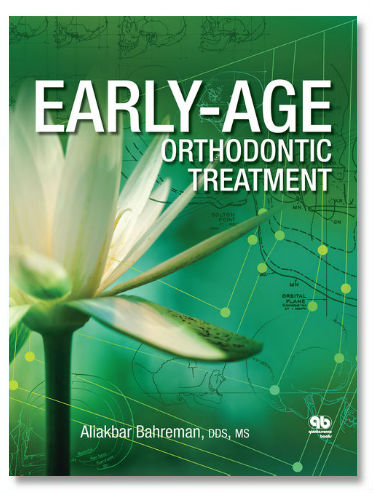
This book presents readers with the information necessary to understand the morphogenesis of orthodontic problems, to differentiate among various conditions, and to apply early intervention approaches to optimal effect. Through integration of basic science and clinical practice, detailed case reports, and abundant illustrations, the author:- Provides an overview of dental development, from tooth formation to permanent occlusion.
- Emphasizes the developmental stages that must be recognized during patient examination to facilitate differential diagnosis.
- Presents clear, step-by-step instructions for different treatment options.
- Demonstrates the benefits achieved by intervention in developing malocclusions and guidance of eruption.
The discussions in part 1 of the concept of early-age treatment and the basic foundation of occlusal development empower practitioners to detect anomalies and intervene as necessary. Part 2 consists of chapters explaining the ontogeny, diagnosis, and early detection of, as well as the proper intervention for, nonskeletal problems. Part 3 includes chapters on early intervention for dentoskeletal problems in the sagittal, transverse, and vertical dimensions. This book cuts through the controversy surrounding early versus late treatment and shows that clinicians must decide on a case-by-case basis when to provide orthodontic treatment. TABLE OF CONTENTS: Part 1 Clinical and Biologic Principles of Early-Age Orthodontic Treatment - Rationale for Early-Age Orthodontic Treatment
- Development of the Dentition and Dental Occlusion
- Examination, Early Detection, and Treatment Planning
Part 2 Early-Age Orthodontic Treatment of Nonskeletal Problems - Space Management in the Transitional Dentition
- Management of Incisor Crowding
- Management of Deleterious Oral Habits
- Orthodontic Management of Hypodontia
- Orthodontic Management of Supernumerary Teeth
- Diagnosis and Management of Abnormal Frenum Attachments
- Early Detection and Treatment of Eruption Problems
Part 3 Early-Age Orthodontic Treatment of Dentoskeletal Problems - Management of Sagittal Problems (Class II and Class III Malocclusions)
- Management of Transverse Problems (Posterior Crossbites)
- Management of Vertical Problems (Open Bites and Deep Bites)
|
|
|
| |
Most Helpful Customer Reviews:
Add Your Own Review |
 BEAUTIFUL ILLUSTRATIONS AND CASE BASED APPROACH VERY FEW BOOKS HAVE ..., April 20, 2015 BEAUTIFUL ILLUSTRATIONS AND CASE BASED APPROACH VERY FEW BOOKS HAVE ..., April 20, 2015
By kapil surana
|
|
BEAUTIFUL ILLUSTRATIONS AND CASE BASED APPROACH
VERY FEW BOOKS HAVE BEEN WRITTEN ON EARLY AGE ORTHODONTICS
EXCELLENT SOURCE FOR PEDODONTISTS AS WELL AS ORTHODONTISTS AND GENERAL DENTISTS
TOPIC BY TOPIC EXCELLENT CHAPTERS AND ANY DENTIST WOULD BROADEN THE TREATMENT OPTIONS
FOR EARLY AGE ORTHODONTIC TREATMENT . VERY NEAT SYNOPSIS AND SUMMARIES AS WELL AS CASE BASED APPROACH.
I AM PLEASED I BOUGHT THIS EXCELLENT BOOK BY DR BAHREMAN.
Was this review helpful to you?
|
|
|
|
Clinical Experiences of the Father of the Modern Orthodontics, April 17, 2015
By Massoud Seifi
|
|
Dr. Bahreman who is known as the father of modern orthodontic in Iran and has dedicated over 45 years of his life for education, administration and practice of orthodontics, has recently published a book titled as “Early age orthodontic treatment”. He generously and systematically share his years of experience and expertise in this easy to read book.
This book presents readers with the information necessary to understand the morphogenesis of orthodontic problems, to differentiate various conditions and apply proper early intervention approaches to optimal effect. The author explores each topic in depth and informative by systematically reviewing the relevant clinical literature and analyzing the scientific evidence to help practitioners select the most effective and efficient modes of treatment.
This text which is divided into three parts consists of 13 chapters’ well written, easily understood with detailed case reports and many excellent illustrations.
Chapter I describe the clinical and biological principle of early age orthodontic treatment. Principle strategy as preparation of optimal environment for normal occlusal development, correction or guidance of the developing irregularity to normal, elimination/reduction of second-phase treatment time, and maximization of growth potential for growth modification treatment are among reasons mentioned for early orthodontic treatment.
Chapter II by providing an overview of different stage of dentition dental development, from tooth formation to permanent occlusion, provides an overview of dental development, from tooth formation to permanent occlusion. The author emphasizes the developmental stages that must be recognized during patient examination to facilitate differential diagnosis.
Chapter III is very important from clinical and paraclinical perspective, that describes elements of thorough diagnostic database and incorporates interview with the patient, Extra/Intra-oral examination, and study cast evaluation. Many clinical and radiographic figures help better understanding of early detection of incipient malocclusion.
Part 2 consists of seven chapters allocated to the ontogeny, diagnosis, early detection, as well as the proper intervention for, non-skeletal problems. This includes space management during mixed dentition, incisors crowding and its management, management of deleterious oral habits, hypodontia, supernumerary teeth, adverse frenum attachment, and early detection and intervention of eruption problems. Each of these situations is covered in depth under a separate chapter.
Part 3 includes three chapters on early intervention for dento-skeletal problems in Sagittal (Class II/III), transverse (posterior X bites), and vertical dimensions (Open/Deep bites).
This book cuts through the controversy surrounding early versus late treatment and shows that clinicians must decide on a case-by-case basis when to provide orthodontic treatment.
Some innovations of author in this book such as: Longitudinal panorex monitoring, HLH technique, TC-TPA, and step arch; are among many creative procedures and methods for early detection, interceptive or corrective interventions. These procedures are accompanied by many case presentations for understanding the instances.
Was this review helpful to you?
|
|
|
|
Very generous to share his years of experience and expertise!, June 04, 2014
By A Customer
|
|
Thanks to the author for years of hard work that is shared systematically in this easy to read book. I am still reading it (about half way through) but find his insight helpful daily in private practice. Very applicable to clinical orthodontics, particularly for an orthodontist like myself that works in a pediatric setting seeing children very early in their dental development. I am looking forward to reading the rest. Highly recommend it.
Was this review helpful to you?
|
|
|
|
|
|
|