|
|
|
|
Home > Books > Dental Materials > The Effect of pH on Fluoride Release, Surface Hardness of Glass Ionomer: The Effect of pH on Fluoride Release and Surface Hardness of Glass Ionomer Based Restorative Materials
|
|
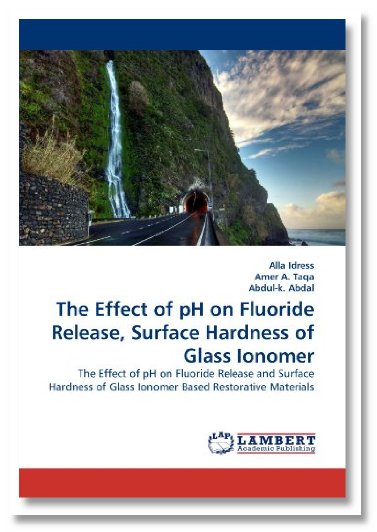
The Effect of pH on Fluoride Release, Surface Hardness of Glass Ionomer: The Effect of pH on Fluoride Release and Surface Hardness of Glass Ionomer Based Restorative Materials
|
|
By Alla Idress, Amer A. Taqa and Abdul-k. Abdal
|
|
List Price: $68.00
|
|
Our Price: $60.72
|
|
You Save: $7.28 (11%)
|
|
|
Availability:
|
Available for immediate delivery.
|
|
Publisher:
|
Lambert Academic Publishing
|
|
Edition:
|
1st
|
|
Published:
|
March 3, 2011 |
|
Binding:
|
Paperback
|

|
|
|
| |
| Product Description: |
|
| |
|
The aims of this study were to detect the amount of fluoride released from the tested materials into three different storage solutions and to determine the change in the surface microhardness after storage.The amount of fluoride released from the three materials was significantly higher in acidic solutions than in neutral solutions. The Compomer released the highest amount of fluoride into the three storage solutions, while the least fluoride release was from the resin-modified glass-ionomer. The surface microhardness of the three tested materials reduced significantly after storage in neutral and acidic solutions compared to dry stored specimens. In acidic solutions, the surface microhardness was significantly lower than in neutral solutions. The Compomer showed the highest microhardness number values.
|
|
|
| |
|
|
|